

San Diego may be known for its beaches and year-round sunshine, but it also hides a surprising collection of forgotten landmarks scattered across the county. From decaying theaters and abandoned mines to mysterious ruins reclaimed by nature, these abandoned places in San Diego tell stories of boom-and-bust industries, failed developments, and changing times. While some can be viewed from public areas or hiking trails, many are fenced off, privately owned, or protected due to safety concerns. Urban explorers should always respect trespassing laws and remember that many of these locations are historically significant as well as potentially dangerous.
Helpful Tips For Visiting San Diego
If you are a fan of walks, check out our guide to the best places to walk in San Diego. Into spooky spots? Check out our guide to the best Halloween spots in San Diego and our list of haunted places in San Diego. And if you’re looking to get off the beaten track, check out our hidden gems in San Diego and our list of unique things to do in San Diego you won’t find anywhere else.
Are you looking for a discount on a flight to San Diego? Check out this Qatar Airways special offer and save up to 20% on your flight.
If you want to save on your stay in San Diego, use this special Booking link to get up to 15% on all Booking properties in town.
If you want to rent a car in San Diego, my personal choice is always AutoEurope; it allows you to compare the best deals from all local rental car providers, and on average, you can save up to 20% every time you use this platform.
Last but not least, let’s not forget about travel insurance. Personally, I always use and recommend SafetyWing. They provide plans for digital nomads and frequent travelers that cover many different circumstances, including flight cancellations, lost luggage, etc.
Old California Theater

We start this guide to abandoned places in San Diego with one of the most popular landmarks, the Old California Theater in downtown. It was opened in 1927 and was a fine movie theater until it was used as a concert hall. Although the building was extensively renovated in the late 1980s, the owners were unable to pay their loans, and the building closed for good in 1990.
The once grand theater has been in a state of disrepair for decades due to water damage, vandalism, and neglect. It has been tried and tried to save, and city officials have even thought about demolishing it due to structural issues. The building is still fenced off and not open to the public today. It is illegal and unsafe to enter the property, but the historic façade is visible from the street.
Eagle Mine & High Peak Mine
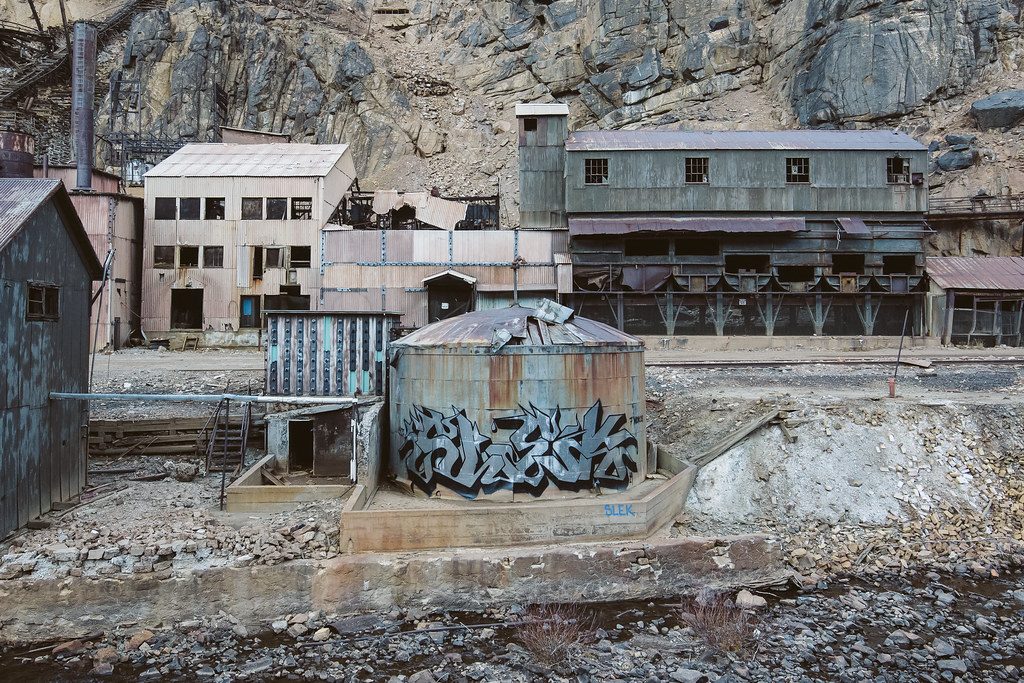
The ruins of the Eagle Mine and nearby High Peak Mine, both symbols of Southern California’s late 1800s mining boom, can be found among the mountains east of San Diego. These gold mines were in operation in the late 1800s and early 1900s until they were no longer profitable due to the depletion of the ore deposits. As with many small mines, the decline in gold production and the increase in operating expenses eventually caused them to be abandoned.
Today, old mine entrances, rusting equipment, and scattered foundations remain along hiking trails, but it is very dangerous to enter the mine shafts due to unstable rock, hidden vertical drops, and toxic air. The surrounding trails are mostly open, but the abandoned structures should only be accessed from the outside and with respect to any posted restrictions.
Abandoned Pump House

A water pump house that was abandoned is located near Mission Trails Regional Park and was a minor part of San Diego’s early water system. The building was constructed in the early 1900s and served as a pumping station to assist in the distribution of water in the expanding city. The pump house was gradually phased out and replaced by newer and more efficient equipment, and eventually it was abandoned, with only the old concrete walls and traces of industrial machinery remaining.
The building is now surrounded by native vegetation and is slowly being taken over by nature. It may be viewed from the nearby trails, but there is no public access to the interior, and visitors should refrain from climbing on the decaying structure. It is not so much for its size as for its atmosphere, which reveals the city’s lost infrastructure and industrial history.
Goat Canyon Trestle

Next on this list of abandoned places in San Diego, we have Goat Canyon Trestle, one of the most amazing abandoned railroad structures in the American Southwest, also known as the “Impossible Railroad. The large 630-foot-long wooden trestle was built in 1932 to replace a previous tunnel that had been collapsing due to the unstable geology of Carrizo Gorge. The railroad ran for decades, carrying freight through the rough desert terrain, but the route was plagued by landslides, flooding, and very high maintenance costs, making it increasingly impractical.
Eventually, freight services ended, and the line was abandoned. The trestle is still standing today in excellent condition and is no longer used for trains. It is a long and arduous trek through the remote desert, where temperatures can get dangerously high. The railway line is private land, and it is technically trespassing to walk on the tracks, although many people do. Please check current access conditions before undertaking the walk.
Mushroom House

Perched dramatically above Black’s Beach, the Mushroom House is one of San Diego’s most unusual abandoned homes. The futuristic concrete house, designed by architect Dale Naegle for Sam Bell of Bell’s Potato Chips, was built in 1968 and looks like a giant mushroom perched on a single central column. For several years, the home was used as a private vacation home, but it went unused after the owners changed and maintenance issues arose.
The house was abandoned for decades because of its exposed cliffside position, the harsh coastal conditions, and its difficult access. The building is still privately owned and is not open to the public. It is a unique design that continues to draw photographers and architecture enthusiasts, and is most admired from Black’s Beach below or from afar from the cliffs.
La Punta de los Muertos

Although the name is frightening, La Punta de los Muertos (“Point of the Dead”) is not a ghost town, but rather a remote coastal area near Point Loma that is home to the remains of historic buildings from San Diego’s early military and maritime history. Small facilities, observation posts, and utility structures were constructed around the peninsula over the years, some of which were subsequently abandoned as military operations modernized.
Today, all that remains are the ruins of the concrete walls and foundations, slowly being eroded by the harsh coastal weather. The surrounding land is mostly protected parkland or military-controlled; access depends on location. Some ruins are accessible to the public from public trails; others are not. The site is more of a historical interest and dramatic coastal scene than an urban exploration site.
The secret pyramids of Scripps Ranch
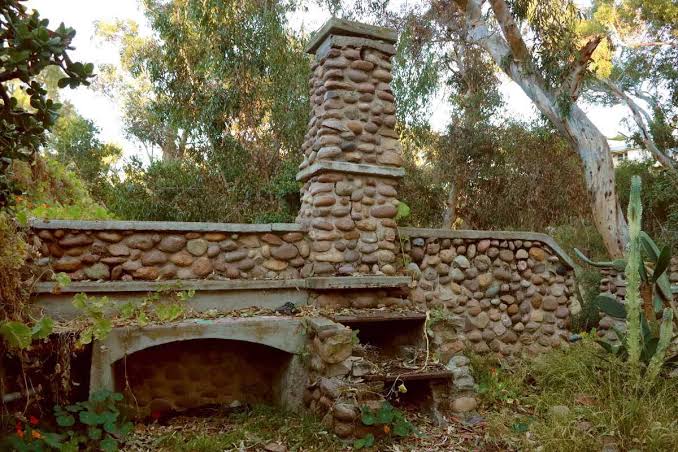
One of the weirdest urban exploration sites in San Diego is the so-called Secret Pyramids of Scripps Ranch. They are not ancient monuments, but rather abandoned concrete structures thought to be a private development or engineering project that was never finished. The site was isolated, and over time, nature took over, leaving the pyramid shapes surrounded by dense vegetation and hiking trails.
They are so strange that they have inspired numerous local legends of hidden bunkers, secret societies, and military experiments, none of which have been substantiated. The buildings are still empty today, and are sometimes explored by curious hikers and photographers. The proximity of the land to residential and environmentally sensitive areas means that visitors are advised to remain on legal public trails and avoid harming the site.
Murder House (Proctor Valley House)

One of the most famous abandoned buildings in San Diego County is the infamous “Murder House” in Proctor Valley, though its reputation is more based on local legend than on any actual history. The house is isolated and was constructed as a private residence, but has been abandoned after years of neglect and repeated vandalism. The abandoned building became a legend of ghost stories, murder, satanic rituals, and paranormal activity, making it one of the most haunted places in Southern California.
In fact, many of the tales have never been substantiated, but the abandoned building was a draw for thrill-seekers until authorities stepped up their patrols due to trespassing and safety concerns. The property is private, the structure is unstable, and entry is illegal. Years of decay and repeated damage have left little trace today, but the legends continue to draw in curious visitors from afar.
Judaic Architectural Graveyard
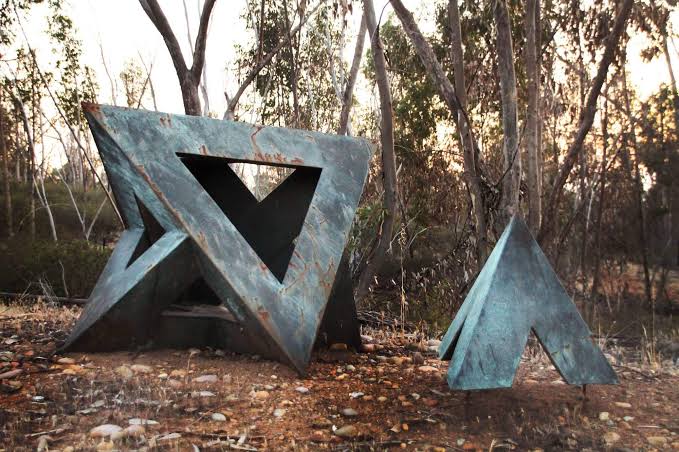
One of San Diego’s most unique hidden gems is the Judaic Architectural Graveyard. It is an outdoor assemblage of salvaged architectural fragments, stone carvings, and decorative elements from demolished and heavily altered Jewish buildings and synagogues of the twentieth century, which are on private property. It is sometimes referred to as an “abandoned” site, but it is better thought of as an abandoned architectural salvage yard rather than an abandoned building.
The collection was put together to save items that would otherwise have been lost, but has been largely untouched over the years, and the area is slowly being taken back by nature. It is located on private property and is not open to the public; do not trespass. The site is not a tourist attraction, but is known to local historians and urban explorers.
La Jolla Nike Missile Site

The La Jolla Nike Missile Site was constructed in the 1950s, during the Cold War, as part of a chain of military sites that would defend San Diego from an attack by the Soviet Union. It was the home of Nike Ajax and subsequently Nike Hercules surface-to-air missiles, radar equipment, and underground support structures. The site was closed in the early 1970s, and most of the complex was abandoned due to advances in missile technology and changing defense strategies.
Today, some bunkers, concrete structures, and military buildings remain, although many are overgrown or vandalized. The property is not officially a tourist attraction, and a large portion of the area is on restricted or privately owned land, so entry is illegal without permission. It is still one of the most intriguing Cold War artifacts in Southern California.
Fort Rosecrans Military Bunkers

There are a few abandoned military bunkers scattered throughout Point Loma, which were part of the coastal defenses at Fort Rosecrans. These reinforced concrete buildings were built in the early 1900s and added during World War II to store ammunition, house observation posts, and shelter artillery batteries that faced San Diego Bay. With the advent of modern military technology, fixed coastal defenses became redundant, and many of the bunkers were decommissioned in the 1950s and 1960s.
Today, several still lie concealed among the coastal bluffs, battered by the ocean winds and salt spray of the past decades. Some are accessible from public trails in Cabrillo National Monument; others are on restricted military property. Visitors should never enter sealed bunkers because of unstable conditions and potential hazards.
Camp Elliott Ruins

Camp Elliott is the site of a portion of one of the largest military training camps in Southern California during World War II. The camp was opened in 1940 and trained thousands of Marines before and during World War II on its extensive firing ranges, obstacle courses, and support buildings. Following the war, most of the base was either dismantled or incorporated into other military bases and university land, with only a few concrete foundations, roads, and military debris remaining.
Some areas are now under environmental restoration programmes as unexploded military munitions may still be found. Occasionally, remnants may be observed from nearby locations, but visitors are not to stray from the designated trails or to venture into the ruins, as unexploded ordnance is a known safety hazard.
Camp Lockett Military Buildings
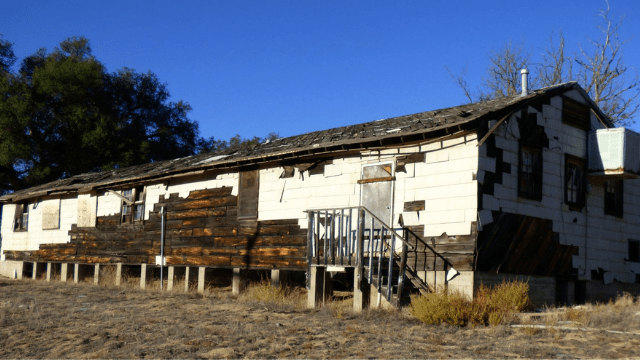
Camp Lockett was a U.S. Army cavalry base, and later a prisoner-of-war camp, located near Campo in eastern San Diego County in 1941. After the war, the military left behind hundreds of buildings, including barracks, administrative offices, warehouses, and utility buildings.
Some of these buildings have since been restored by local preservation groups, while others are still empty or in various states of disrepair. The historic district is slowly being redeveloped and preserved, creating a mix of restored and abandoned military architecture. Some of the historic area is open for visitors, but many of the buildings are closed due to safety issues and restoration work.
Chollas Cement Plant Ruins

One of the lesser-known industrial ruins in San Diego is the abandoned Chollas Cement Plant. It operated as a construction materials plant throughout much of the twentieth century, and was eventually closed as industrial activity moved to other parts of the region. Following its closure, many of the processing buildings, concrete foundations, and industrial equipment remained, providing an atmospheric reminder of the manufacturing history of San Diego.
The site has been slowly taken over by nature, with plants growing through the cracks in the concrete and rusting metal. The site is located on restricted land, and many buildings are unstable, so public access is not allowed. The ruins are more of a historical interest than a place to explore in the city.
In World War II, Balboa Park became a huge naval hospital where thousands of wounded soldiers were treated before being sent home or to other military bases. Following the war, temporary hospital structures were slowly demolished, although a few abandoned foundations, utility structures, and forgotten remnants remained for decades in less-traveled areas of the park. Most are now in poor condition or overgrown with vegetation, and are reminders of the wartime function of the park. These ruins are not a formal attraction, but history buffs may find them on their visits to Balboa Park. Visitors should stay on public paths as some remnants are fragile and in protected areas.
Where to Stay When Exploring Abandoned Places In San Diego?
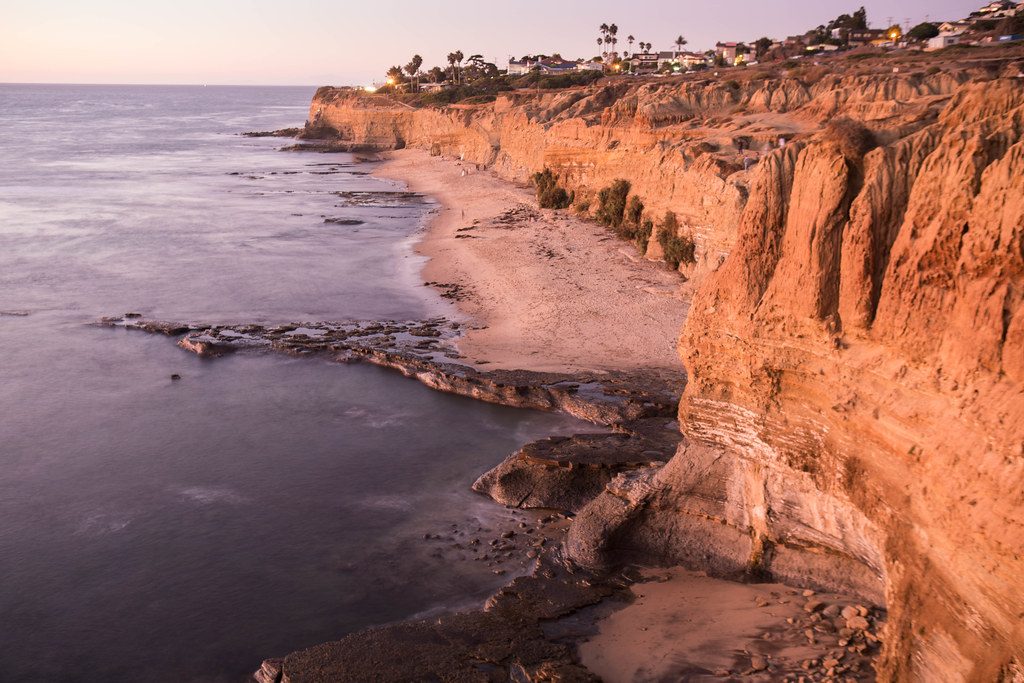
If you are building a trip around these abandoned places in San Diego, I would not stay in a different hotel for each one. San Diego is spread out, and the best strategy is to choose a central base. A good choice is Point Loma / Shelter Island, because it puts you close to the coastal ruins and still gives reasonable access to Balboa Park, Scripps Ranch, and downtown. Point Loma hotels are also among the closest options for Cabrillo/Fort Rosecrans areas.
My recommendation:
Best Overall Base: Best Western Plus Island Palms Hotel & Marina
Why this hotel fits this itinerary:
- Great location for:
- Fort Rosecrans Military Bunkers → ~10–15 min
- La Punta de los Muertos / Point Loma ruins → ~10–15 min
- Old California Theater → ~15 min
- Balboa Park / Navy Hospital remnants → ~15–20 min
- La Jolla Nike Missile Site → ~25–35 min
- Mushroom House (La Jolla) → ~30–35 min
- Secret Pyramids of Scripps Ranch → ~30–40 min
- Chollas Cement Plant → ~20–25 min
It is also in a scenic waterfront area, which is a much nicer place to return after exploring abandoned sites.
If you want something closer to Balboa Park:
Better for:
- Old California Theater
- Balboa Park ruins
- Downtown exploration
- Chollas industrial sites
Less convenient for:
- Point Loma
- Fort Rosecrans
- Cabrillo area
If you want a cheaper practical base:
Crowne Plaza San Diego – Mission Valley by IHG
Mission Valley is probably the most central driving location:
- ~15 min to downtown
- ~20 min to Point Loma
- ~20 min to La Jolla
- Easier highway access for eastern sites
For the eastern abandoned sites:
The difficult ones are:
- Goat Canyon Trestle
- Camp Lockett
- Eagle Mine & High Peak Mine
These are not really “San Diego city” attractions. They are far east and require a separate day trip. A hotel in downtown/Point Loma is still fine, but expect:
- Goat Canyon → roughly 2+ hours each way
- Camp Lockett → about 1 hour+
- Eagle Mine → depends on trail access, often a full day
For an abandoned San Diego road trip, my ranking would be:
- Best Western Plus Island Palms Hotel & Marina — best mix of location + experience
- Crowne Plaza Mission Valley — best if you want maximum driving convenience
- Inn at the Park — best if your focus is historic downtown/Balboa Park
I would personally choose Point Loma/Shelter Island because the scenery is much better and it puts you near the most interesting abandoned military/coastal locations.
How did you like this guide to abandoned places in San Diego? Did you ever visit any of them? Do you know about any other places that deserve a mention? Feel free to share your thoughts in the comments below.
Like it? PIn it.
