

All meals included! See more cities in less time! Luxury motorcoach transportation! Small group travel!
Sounds wonderful, doesn’t it?
The glossy brochures are spectacular. The websites are beautiful. The photographs show magnificent castles, charming villages, smiling travelers, and breathtaking scenery.
Everything looks perfect.
Until you get there.
Suddenly, you’re spending hours on a bus, packing and unpacking your suitcase, rushing through famous attractions, and eating pre-plated dinners with 30 people you barely know.
And here’s the surprising part:
You might not even realize you’re on a bad tour.
After all, you’re seeing Europe. Someone else handles the arrangements. You’re visiting places you’ve dreamed about for years.
What’s not to like?
Quite a lot, actually.
Before going further, let’s give the larger tour companies some well-deserved credit. They’ve introduced countless people to the wonders of travel, helped travelers gain confidence exploring unfamiliar destinations, and created wonderful memories.
We applaud them for that.
But we believe travelers deserve more.
Since founding Small Group Tours by The Traveling Professor in 2009, we’ve learned that what makes a tour attractive in a brochure isn’t necessarily what makes it a great vacation.
Here are six warning signs to consider before booking your next group tour.
1. Too Many Cities, Too Little Time
Some tour itineraries read like a geography contest.
Visit this city! See that castle! Photograph another famous landmark!
But what happens when you’re constantly moving?
Wake up. Pack. Eat breakfast. Check out. Load your luggage. Board the bus. Travel. Check into another hotel.
Repeat tomorrow.
Somewhere in that routine, you’re supposed to experience Europe.

And when you finally reach somewhere wonderful, there’s barely enough time to take a photograph before someone announces it’s time to leave.
We call that hit-and-run sightseeing.
Wouldn’t you rather spend several days enjoying Paris than a few hours checking it off a list?
Our philosophy is simple: Stay longer, unpack less, and actually experience the destinations you’ve traveled so far to visit.
2. Your “Small Group” Might Not Be So Small
Here’s something many travelers don’t realize.
There’s no universally accepted definition of a small group tour.
Some companies consider groups of 24, 28, or even more travelers “small.”
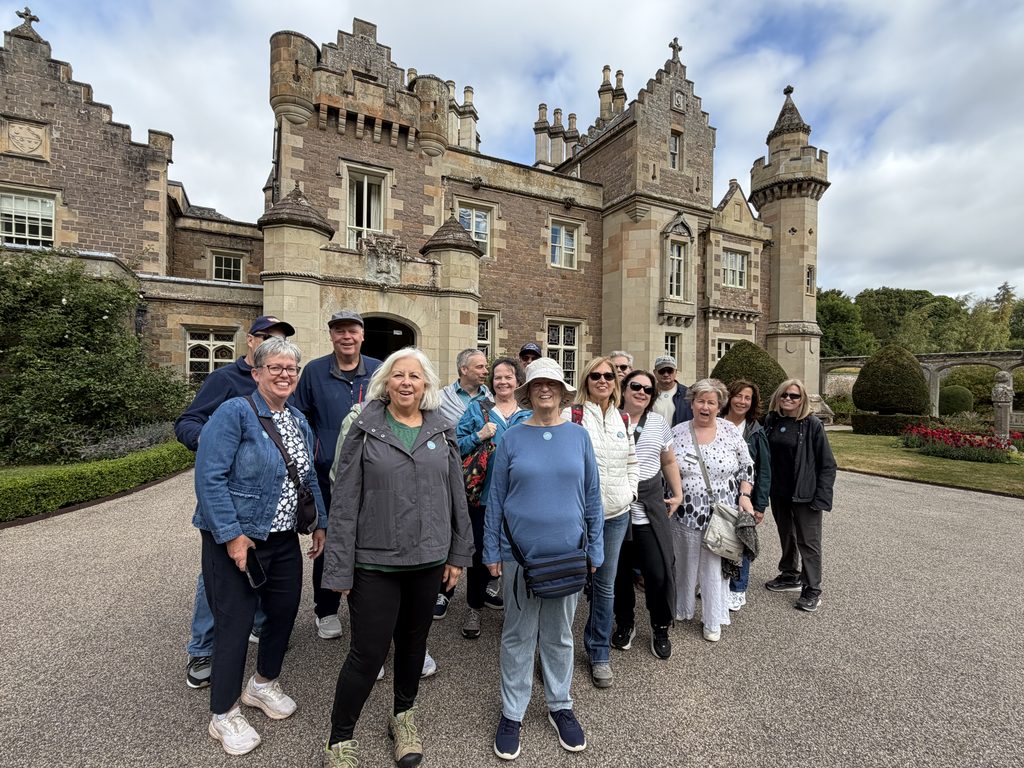
At The Traveling Professor, our groups typically consist of just 12 to 16 travelers, sometimes fewer.
Does that difference matter?
Absolutely.
Consider 30 people checking into a hotel, boarding transportation, using restrooms, or entering a museum.
A group can only move as fast as its slowest member. Little delays add up.
And what about your guide?
With 25 travelers, you potentially have 25 people competing for the guide’s attention.
With 12 or 14, there’s more opportunity to ask questions, have conversations, and genuinely engage with the person bringing a destination to life.
But there’s an even bigger benefit.
Small groups can go places larger groups simply can’t.
On our Scotland scenic rail tour, we can arrange intimate Scotch whisky tastings at smaller distilleries, sometimes featuring rare whiskies.
A distillery that welcomes 12 visitors might never consider accommodating a motorcoach carrying 40.
That’s not just a smaller group. That’s a completely different experience.
3. Are You Seeing Europe—or Just Its Highways?
Here’s a question every traveler should ask before booking a group tour:
How many hours will I spend sitting on a motorcoach?
You might be surprised by the answer.
There’s nothing inherently wrong with buses. Sometimes they’re the most practical transportation.
But imagine visiting Norway, a country famous for magnificent mountains, waterfalls, and fjords.
Would you rather experience that scenery aboard a bus or travel through it on a spectacular railway or ferry?
On our Norway and the Fjords by Scenic Rail and Ferry Tour, we don’t use motorcoaches for our principal journeys between destinations.
Instead, our small groups enjoy scenic trains, ferries, and fjord boats.
One highlight is the famous Flåm Railway (Flåmsbana) between Myrdal and Flåm, winding past breathtaking mountain scenery and waterfalls.
We also stay three nights in Flåm, giving travelers time to appreciate the fjords rather than simply passing through.
We embrace scenic rail travel on our tours of Italy, France, Scotland, and Peru, including the unforgettable train journey to Machu Picchu.
Why?
Because we believe transportation should be part of the travel experience, not just a way to get from one attraction to another.
4. All Meals Included? Be Careful What You Wish For.
“All meals included!”
Sounds like a tremendous value, doesn’t it?
But let me tell you about something we witnessed in France.
We were sitting outside a charming restaurant, watching the world go by. We’d ordered from the regular menu, choosing whatever appealed to us.
Appetizers, wine, main courses, dessert. Everything was our choice.
No rush. No schedule. No one telling us what to eat.
We were in France, for goodness’ sake!
Then a tour group of approximately 30 people arrived.
They were ushered into a back room where two long tables had been arranged.
From our table, we could hear the waiter calling out:
“Who ordered the chicken?”
“Who ordered the fish?”
It sounded like an auction!
Out came the pre-plated dinners while we continued enjoying our leisurely meal, the atmosphere, and the freedom to choose whatever we pleased.
I remember thinking, These people traveled all the way to France. Is this really how they imagined dining here?
Now, don’t misunderstand me.
There are times when included meals make perfect sense.
On our Peru, Machu Picchu and Amazon Jungle Tour, for example, we stay in a remote rainforest lodge.
There aren’t exactly dozens of neighborhood restaurants to choose from!
Of course, meals are included. But we carefully select our accommodations to ensure the dining experience remains enjoyable and memorable.
We’re not opposed to included meals.
We’re opposed to included meals that take away the pleasure of dining.
Whenever practical, we believe travelers should have three important freedoms:
- Eat when they want to eat.
- Eat with whom they want to eat.
- Eat what they want to eat.
Maybe you’d enjoy a leisurely dinner with new friends. Perhaps you’d prefer a quiet meal with your spouse. Or maybe you’ve discovered a wonderful little bistro.
That’s your decision.
You’re on vacation!
Would you rather experience the cuisine of France—or simply be fed in France?
5. Your Hotel Should Feel Like Your Destination
A tour brochure might proudly advertise four-star hotels.
Wonderful!
But where are they located?
Large tour groups need hotels capable of accommodating dozens of rooms and travelers arriving simultaneously. That can limit their choices.
Smaller groups have more flexibility.
Take our Paris Once Again Tour.
We stay in a charming boutique hotel in the heart of Paris, surrounded by wonderful cafés, bistros, shops, museums, and Parisian neighborhood life.
Step outside, and you’re in Paris!
Not on the outskirts waiting for a tour bus. You’re actually experiencing the city.
You can enjoy an evening stroll, discover a neighborhood restaurant, or sit with a glass of wine and watch Parisians going about their day.
Isn’t that why you came?
There’s nothing wrong with a Marriott or Comfort Inn.
But why travel thousands of miles only to stay somewhere that feels just like home?
Where you stay should be part of your travel experience, too.
6. Doesn’t a Smaller Group Cost More?
This might be the biggest misconception of all.
People naturally assume that traveling with 12 to 16 people must cost substantially more than traveling with 30 or 40.
After all, larger groups benefit from economies of scale.
That’s true, to a point.
But large tour operations have expenses, too. National advertising campaigns, extensive administration, motorcoach transportation, drivers, accommodations, and complicated logistics all cost money.
At The Traveling Professor, we operate differently.
We keep our business lean, emphasize efficient transportation, and carefully select hotels and experiences.
The result? Our tours are frequently competitive with larger-group alternatives and sometimes cost less on a per-day basis.
Of course, the fairest comparison considers group size, hotel locations, transportation, sightseeing, and exactly what’s included.
We’re not trying to be the cheapest tour company.
We’re trying to provide a bigger and better travel experience at a fair price.
Before Booking Your Next Group Tour, Ask These Questions
Don’t let glossy brochures or impressive websites make the decision for you.
Ask how many people will be traveling. Find out how many hours you’ll spend on buses. Look at the hotel’s location. Consider how frequently you’ll change accommodations.
And think carefully about whether included meals and packed schedules really improve your vacation—or simply make things easier for the tour operator.
You may discover that you’ve been judging tours by the wrong criteria.
Thank You to the Big Tour Companies. But Travelers Deserve More.
We sincerely appreciate the larger tour companies for introducing so many people to the pleasures of travel.
Many travelers enjoy wonderful vacations with them.
But we believe there’s a more personal, flexible, and authentic way to experience the world.
Less time on buses. More spectacular journeys.
Fewer people. More interaction with expert guides.
Less regimented dining. More freedom to enjoy authentic cuisine.
Fewer hotel changes. More time experiencing destinations.
And access to intimate places and memorable experiences that larger groups may never be able to enjoy.
That’s the philosophy we’ve followed since 2009.
We don’t want to be the biggest tour company.
We want to provide the best travel experience we can.
Because travelers deserve something bigger and better.
Bigger and Better Tour Experiences Because We’re Smaller.
And now you know why.
Discover Small Group Tours by The Traveling Professor
No big buses. No big crowds. No hit-and-run sightseeing. Just smaller groups, bigger experiences, and better travel.


